This past week,
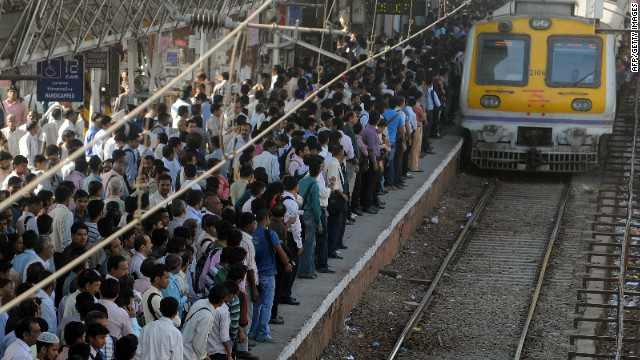
India suffered a massive power outage, stranding
millions and leaving over 670
MILLION people without power. This
crisis continued to
unfold into a second day.
India may be better suited for this event than America based upon this
excerpt:
But
despite the scale of the power failure, many Indians responded with shrugs. In
the first place, India’s grid is still being developed and does not reach into
many homes. An estimated 300 million Indians have no routine access to
electricity.
Second,
localized failures are routine. Diners do not even pause in conversation when
the lights blink out in a restaurant. At Delhi’s enormous Safdarjung Hospital,
doctors continued to rush around as hundreds of patients lay in darkened
hallways.
Third, so many businesses employ backup
generators that, for many, life continued without much of a hiccup. Dr.
Sachendra Raj, the manager of a private Lucknow hospital, rented two new
generators two months ago, and they were keeping the hospital’s dialysis
machines running and the wards air-conditioned. “It’s a very common problem,”
Mr. Raj said. “It’s part and parcel of our daily life.”
Ironically, the lack of a resilient power grid may have made them resilient
in this case.
How would America react to
a power outage of this magnitude?
In
early July 2012, the East Coast suffered a power loss, but
only 2
million were without power.
It
occurred during terrible summer thunderstorms and left the area powerless
during a following heatwave. Egypt experienced a massive
crippling outage as well.
Upon reviewing the linked news articles, several questions arise.
I present the following questions in the
effort to promote thoughts and discussions about this.
These are designed to cause you to pause and
plan, or at least consider planning, before something happens.
If you are a business leader, manager, or
small business owner, these questions extend from you to your employees.
How do you as a supervisor take care of your
employees and their families if needed?
I ask,
if the power were to go out, RIGHT NOW, on a massive scale, what would
you do at each of the below locations.......
Work
- How would you check on your
family?
- You might be
able to use your laptop or cell phone since they are battery operated,
but if the internet/cell service provider is without power, how will the
tower or server relay the information? They might have
generators, but what if they do not? Even if they do, will you be
able to get through the increased communications traffic?
- What is the decision from
leadership? Are you staying at
work, or have you been sent home for the day? Are you
the leadership, the decision maker?
What decision do you make?
Why? What about tomorrow or
the next day? Are you coming in to work if the power
is still out?
- If you are a part of
the leadership, have you accounted for all of your employees? What about the ones offsite for the
day? Are any stuck in elevators by
chance?
- Do your electronic
card door locks work? Or is
everything locked down or locked open?
- Did you purchase
emergency supplies for the workplace?
Do you open them yet? Or do
you wait?
- Do you implement your
Business Continuity plan? If not,
why not?
- Are you hungry? Have you eaten? Did you pack a lunch or did you bring
money to buy lunch today? Do you
avoid cash and rely on your credit/debit cards for transactions? How are you going to buy food when the
power goes out?
- What’s in your desk or
locker or vehicle to eat? (How
long has it been there – gross!)
- Presume that you have been
sent home, How are you getting out of the building?
- Can you see in the
hallway? While laws require
battery powered emergency lights in specific locations, it does not mean
they work, or the batteries are fresh.
At a previous client location, the power went out, I counted eight
(8) battery backup lights which were not working. Eight out of ten. While this location could have been the
exception, but what if you are at “the exception?” Can you navigate the hallway or
stairwell or basement without light?
Have you tried? Do you have
a flashlight or alternative light source available at your desk? What about when you go to the
conference room on the next floor?
Do you have an extra set of batteries in case the light gets
turned on by accident (personal experience!)? One of the onboarding processes for
newly reported sailors on a ship requires them to navigate from their bed
to a weather deck (weather exposed area on a ship) with a blackout hood
on their head. As a former sailor
who participated in this process several times, I can tell you, little
makes you memorize the path and amount of steps taken to the weather deck
like a blackout hood.
- Do the elevators work?
- My new client site,
leaving the building is not a large issue, as I'm in the bottom 1/3 of a
tall high rise, I'll walk down the stairs. However, if I'm at my
corporate location, I'm located in the top 1/3 of a 48 story
building. Walking down over 35 stories can be daunting, especially
if a person is out of shape or has mobility issues. What about the
other people in the same building? For anyone who hasn't seriously
evaluated these possibilities, please, please, take the time and review stories from the stairwells
in the World Trade Center on 9/11.
They will be eye opening.
By the way, how many stairwells are at your location? Can you use both/all of them? Do you know where they empty? Can you get there in the dark?
- Whoops, you cut your
hand on the door going into the stairwell. Where is the first aid kit? Wait, you can’t go back inside the
office because the door locked behind you, leaving you in the stairwell. Remember you can always get out, you
cannot always get back in.
- You finally get to your
vehicle, Is your vehicle behind electrical doors or gates or is it in an
open parking lot you can drive off at your will?
- Or…do you stay at work?
ON
THE ROAD

- Are you supposed to pick
anyone up on the way home, i.e. kids from the daycare? Have you arranged extended stays with
the babysitter if you are unable to efficiently get home?
- If you had to, can you walk
home, RIGHT NOW?
- Are you wearing the
latest fashioned, leather soled wingtips (guilty...) or the $200 high heels that were
made by people who hate
feet? Can you walk several miles in them on roads, sidewalks, trails,
grass fields, muddy dirt lots, etc?
- In 2005, the average
commute distance was 16 miles. Are you prepared, RIGHT NOW, to walk
that distance? What if you travel
for your job, take a medical supply salesman, who commutes 15 miles to
work, but is, on average 60 miles away from the office any given day to
see clients? While we’re thinking
about these numbers, a marathon is 26.2 miles long and takes athletes
between 4.5 to 5.25 hours
to complete while running. Walking…in business attire…carrying
bags of stuff, in an adverse environment….how long would it take
you?
- Are you physically able to complete the
distance?
- What neighborhoods do
you have to walk through to get home?
Pause on that for a minute…Are you prepared or able to walk
through those rougher neighborhoods?
- What obstacles are in
your way? If you work in DC, but
live in Northern Virginia, do you know alternate ways around the
river?
- How hot/cold is
it? Is it raining or snowing? Does the weather drive your decision to
leave work or home?
- Do you have food or snacks to
eat? Water?
- It’s been four hours, you
finally have cell signal or are able to get out on the cell phone. Whoops again, it isn’t charged. In fact, it killed itself searching for a
signal or trying to resend a text message for the past two hours. No GPS or maps to get you home if you
are walking or driving on side streets to avoid the massive gridlock…now
what?
- Did you take the subway,
metro, or BART to work? Do they
have backups? The San Francisco
Bay Area BART does not. If there is
a power outage, local power plants must re-route prioritized power to the
stations affected to keep the trains moving. However, if there is a wide-spread
outage, say, regional or larger, they stay where they are. Therefore, I ask, if you subway, metro,
or BART, how are you proceeding? Do
you wait, do you leave the train and return to work, do you leave the
train and head home? What are your
options?
- What about all of your
‘luggage?’ I currently use a mass
transit system to and from work. I
observe, everyday, people taking two, three, four bags into work. A lady will have her purse (1), a laptop
case (2), a briefcase/messenger bag (3), and another bag (4) full of
‘stuff.’ A guy will have a gym bag
(1), his laptop case/briefcase (2), and a lunch bag (3). People tend to bring several bags when
they are headed to work or home, or commuting in general. What happens to all of this ‘stuff’ when
you have to walk home, or stand at a subway station for several
hours? Are you using a backpack or
a messenger bag for work? Are you
taking several bags into work? Is
everything necessary? If you had to
leave the building RIGHT NOW, or had to walk home a long distance, would
you take them? If so, why? If not why not? Is there anything that can be left at
work to lighten the load? If not,
are there other options that would make it easier to travel, perhaps a
rollaway bag, or backpack?

HOME
· You’re finally home, either through traffic in
the car, by mass transit or by the soles of your now blistered feet.
Are you hungry yet?
Well, according to the CDC,
avoid the
fridge if it’s been over two hours.
Your freezer may be okay, but your water supply is questionable.
1. How
are you going to eat/drink without power?
2. Is
your stove electric or gas? If it’s gas,
is it electronic ignition? If so, do you
have matches to light it? What about the
oven?
- What about your refrigerated meds, insulin,
liquid amoxicillin, etc. Can those
last? Can you safely use them? If not, what are your options?
- How hot or cold is it right now? Do you have enough blankets to stay warm for
a few hours to a few days? What about
your elderly family members?
- Are your smoke detectors/fire alarms beeping at
you yet? What do you plan to do with
them? Remember that fire exists outside
of electricity. If you disable them,
what is your plan for fires?
- Do you have lanterns? Are they propane or kerosene or battery
powered? What about your
flashlights? Did the batteries leak last
winter, causing acidic corrosion in and around the battery compartment?
- Do you have family members who require power for
medical equipment? How long do their
batteries last?
We all could go on and on with this list of questions. Think about your ability to continue working, head home to another location, and/or take care of your family in an austere environment.
Remember
that action almost always beats reaction.
Plan ahead, consider all of these questions and ask yourself, “How can I
become better prepared?” If you are in a
position of leadership, are you doing enough for your staff? Begin the planning process, become resilient.